

IMM belt grinding and polishing for metal components.
IMM manufactures industrial belt grinding and polishing machines, ranging from machines with manual workpiece guidance to CNC machines and robotic cells. Its solutions also cover complex components such as turbine blades and extruder screws. Machine and process selection follows the requirements of the workpiece.
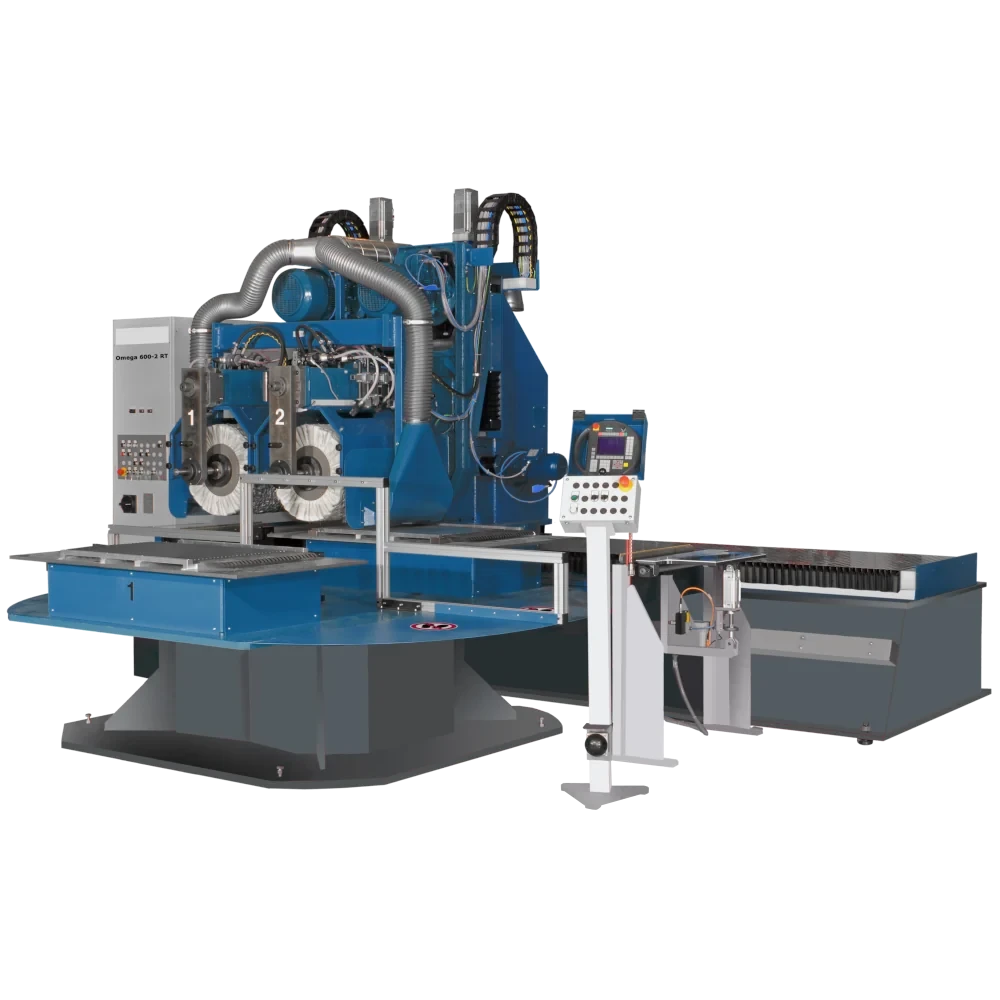
Product families
Consider access and support when guiding the workpiece by hand at the machine. Assess the contact wheel and abrasive together with the machine concept.
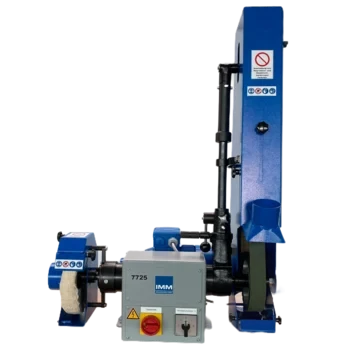
Stationary belt grinders and polishers
Support and access are fundamental when the operator guides the workpiece. Select the machine and contact wheel around the actual component, rather than motor power alone.
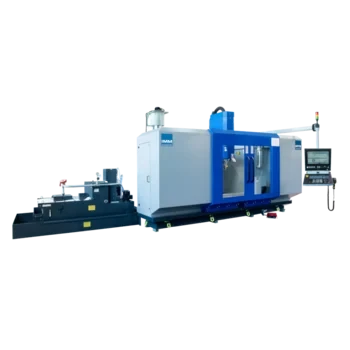
MTS and SPE blade machining
These machine families address belt grinding of turbine blades. Profile retention, critical transitions and the inspection plan matter as much as machining time.
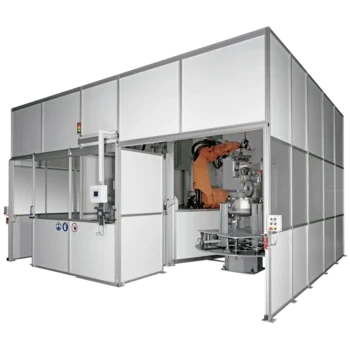
RC robotic cells
Robotic finishing requires part handling and tool action to be assessed as one system. Fixtures, abrasives and programmed paths together determine the trial result.
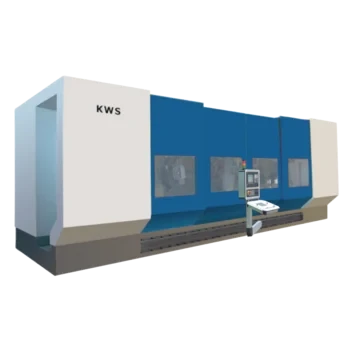
KWS for rotationally symmetrical parts
The KWS family is designed for grinding and polishing rotationally symmetrical workpieces. Length, diameter, support and target finish establish which configuration is worth assessing.
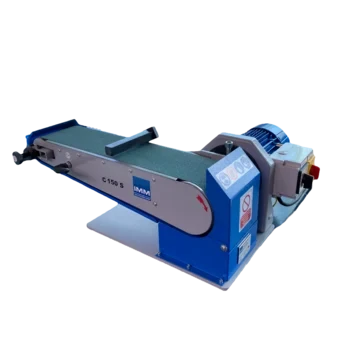
Weld seams and larger surfaces
Gamma seam grinding and Omega surface polishing serve different finishing tasks. Selection starts by separating the required material removal from the final visual finish.
Complex shapes, edges and surfaces.

Energy and aerospace components
Complex blade geometries place emphasis on access and profile following. A production trial needs inspection methods and permitted stock removal alongside drawing requirements.
Medical metal components
Small radii, surface continuity and repeatability call for a focused trial. Machine suitability does not replace the manufacturer’s required process validation and documentation.
Series production of stainless products
For sinks, covers or fittings, evaluate appearance alongside handling time. Include part variants, changeovers and polishing consumable changes when assessing robotics.
What access and workpiece handling are needed?
Start with the condition before and after machining: drawing, 3D model, material, tolerance and surface requirement. Add batch sizes and the real mix of variants; the fastest individual cycle does not necessarily deliver the best daily output.
For a robotic cell, consider workholding, feeding, extraction and inspection before requesting a quotation. Technical preparation with Ferroszerszám helps establish whether a manual machine, dedicated machine or robotic system fits the task best.
Catalogues
IMM machine brochures provide an overview of individual configurations. For a specific setup, discuss the workpiece requirements together with the machine specifications.
IMM – MMB grinding and polishing machines
Overview of manually operated belt grinding and polishing machines, extraction units and accessories.
Open catalogueSPE 6 CNC grinding machine for turbine blades
To play this external video, allow its provider through Cookie settings in the footer, then press Play again.
Open videoHistory
IMM’s machine-building roots are linked to the METABO belt grinder introduced in 1952. The company presented robotic grinding solutions in 1988 and moved to Riederich in 2015.
The range extends from stationary grinding and polishing machines with manual workpiece guidance to CNC equipment and robotic cells, for both flat surfaces and complex three-dimensional components.
Milestones
- 1952
The first manual METABO belt grinder is built.
- 1988
A six-axis robotic grinding cell serves sanitary fittings.
- 2015
The move to new premises doubles production space.
- 2019
A dedicated fixture extends CNC weld-seam grinding.
- 2026
The North American representative office opens in Chicago.
Frequently asked questions
Where should selection of a belt grinder with manual workpiece guidance start?
Show the workpiece geometry, target surface and available access. Match the machine and contact wheel to those requirements rather than choosing on motor power alone.
Which part details matter for a finishing trial?
Record tolerances and finish requirements alongside the initial condition. Where there are several variants, show representative geometries and batch sizes so the trial reflects the actual task.
What should I send Ferroszerszám for an IMM machine discussion?
Send a drawing or 3D model, material grade, dimensions and a surface sample or specification. Include batch size, current processing method and important installation constraints.
Request advice
Tell us which product you need or describe the task. Let’s discuss a suitable solution.
Contact